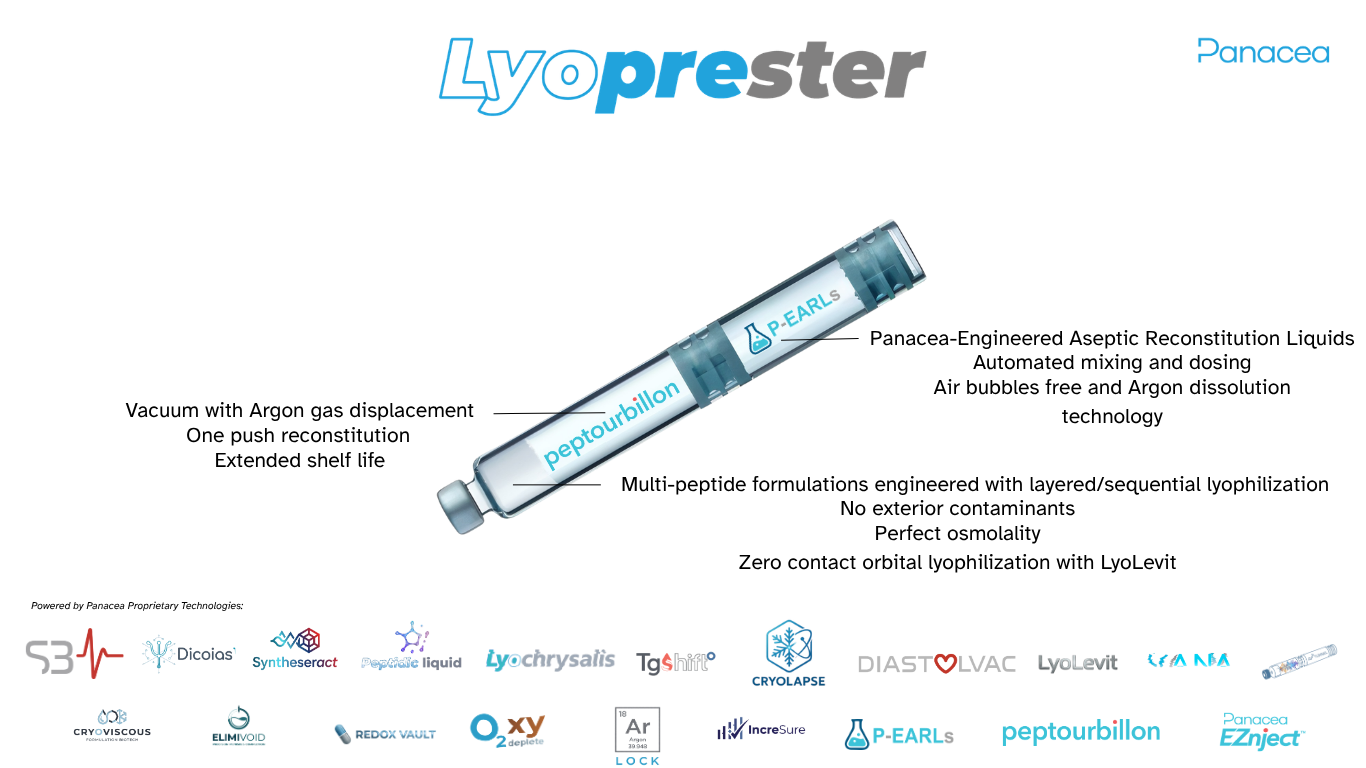
Vacuum–Argon–Nitrogen Architecture
 · Panacea Bio Chem
Vana Machine™
Closed before it ever sees air.
The vacuum and argon closure mode of the Lyochrysalis™ chamber. A Lyoprester® cartridge goes in with its cake and its reconstitution liquid fitted; it comes out a closed system, with the top plunger and cap seated under vacuum and argon.
- Vacuum to just before boiling — the liquid never boils.
- Argon admitted and dissolved into liquid and cake: ArgonLock™.
- Top plunger and cap placed under vacuum and argon.

The principle behind ArgonLock™
An old protection, applied to peptides.
“The principle that protects welding arcs, wine cellars and the Charters of Freedom, applied to peptides.”
— Bogdan DicoiasPanacea Bio Chem, on the argon backfill of the Vana cycle
Argon is inert, heavier than air and indifferent to the molecule it surrounds. Welders shield a molten arc with it; cellars blanket wine with it; the founding documents of the United States rest in argon-filled encasements. Vana does not lay the argon over the product like a blanket — it dissolves the argon into the liquid and the cake, where the oxygen was.
In one paragraph
Vana Machine™ is the vacuum and inert-closure mode of Panacea Bio Chem's Lyochrysalis™ chamber, invented by Bogdan Dicoias. A Lyoprester® cartridge enters it with its lyophilized cake and its P-EARLs™ reconstitution liquid fitted, and without its top plunger and cap. The chamber draws the cartridge down to just before the liquid's boiling point — never past it — admits argon that dissolves into the liquid and the cake (ArgonLock™), and then, still under vacuum and argon, seats the top plunger and the cap. The Lyoprester becomes a closed system before it ever sees air. It prevents air gaps and plunger drift, lands the target vacuum inside the cartridge and keeps it there until the moment of use.
by Bogdan Dicoias, biochemist and inventor.
From the laboratory
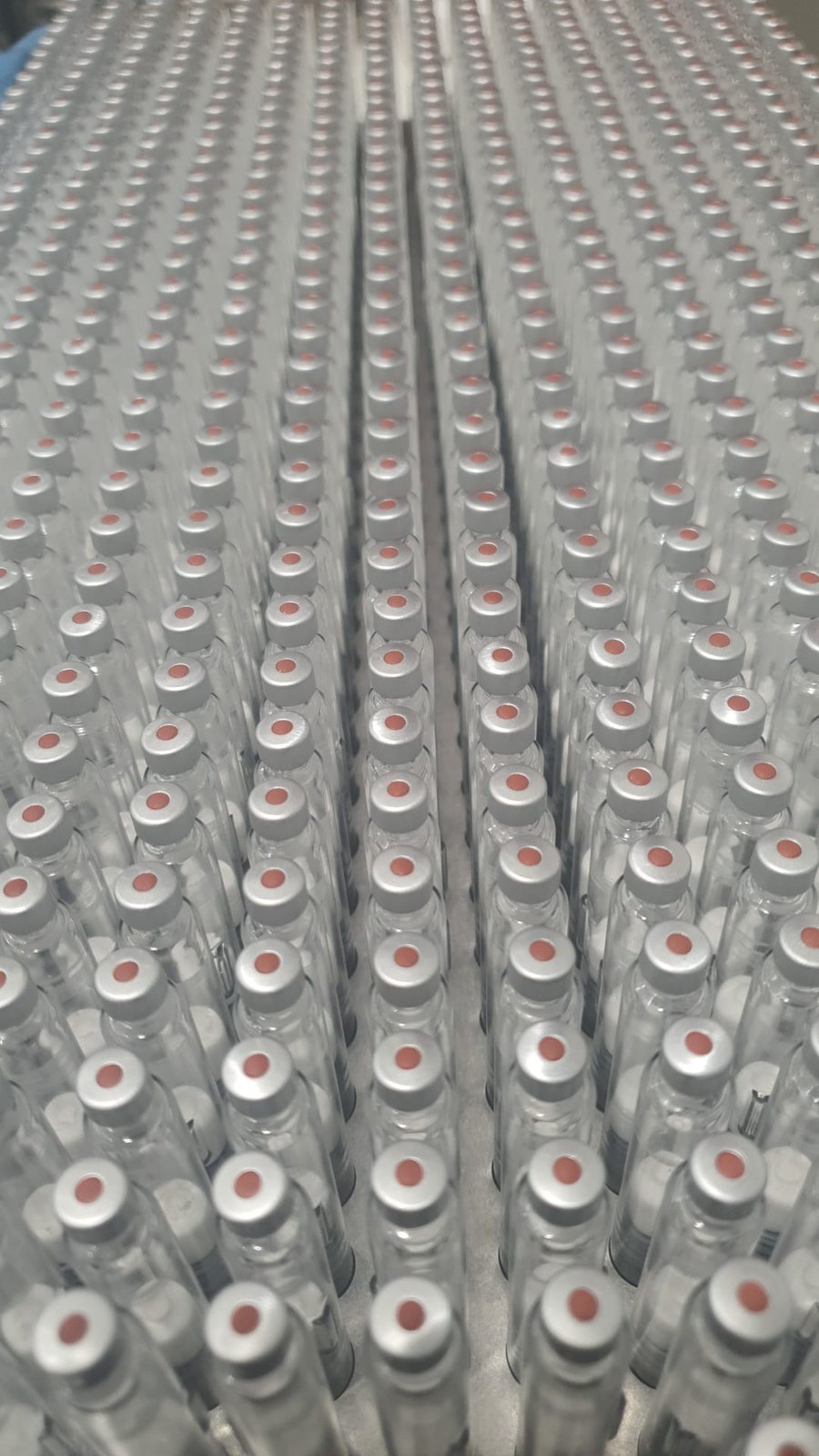
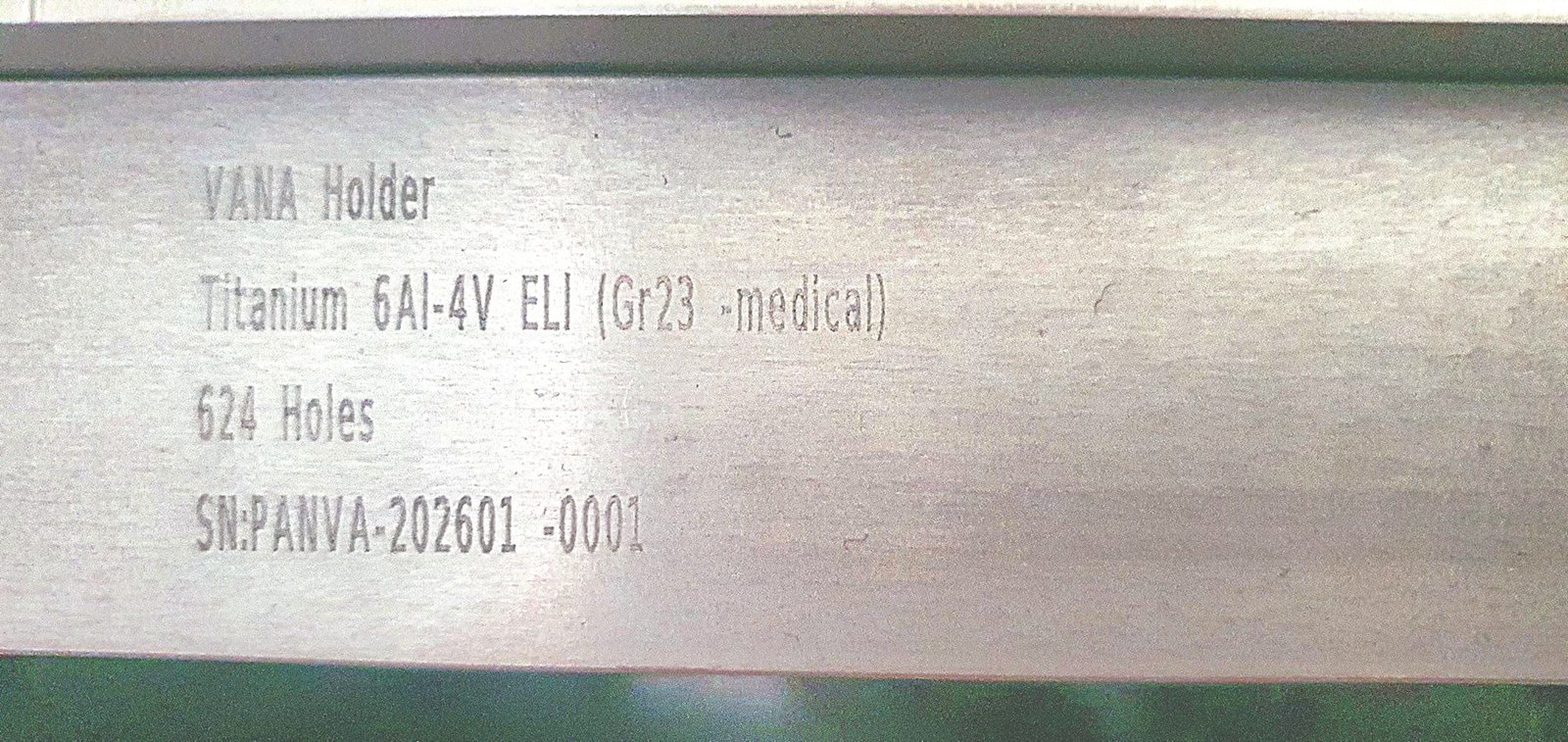
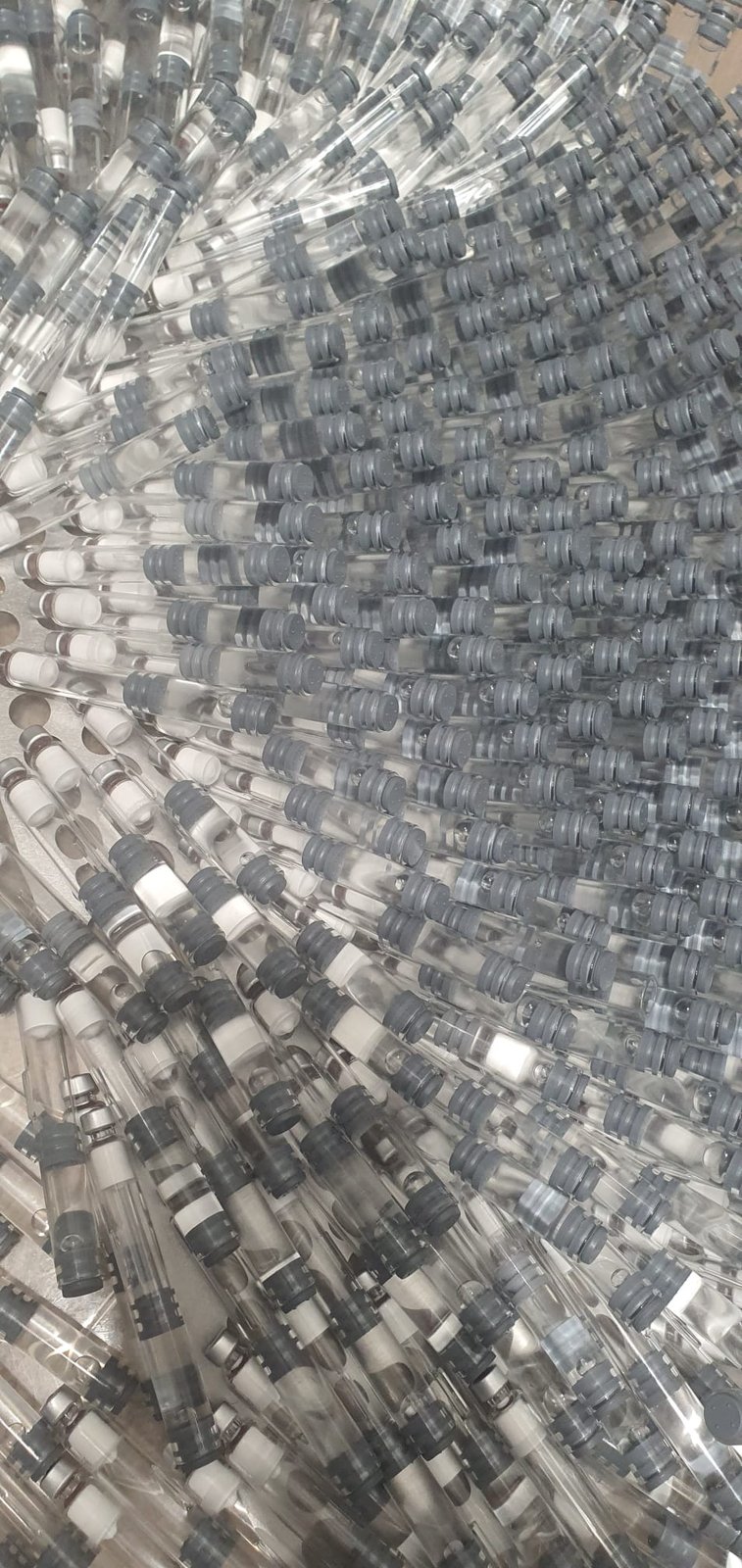
The Vana Holder, and the Lyopresters it carries.
The problem it closes
A cartridge closed in air takes the air with it.
A dual-chamber cartridge holds two things that must not meet until the moment of use: a freeze-dried cake and the liquid that will wake it. Close that cartridge the ordinary way, in a room, and three things ride along.
An air gap sits above the liquid, ready to move and to foam. Oxygen stays dissolved in the liquid and trapped in the cake, with a whole shelf life ahead of it to react. And the plungers, seated against atmospheric pressure, can drift when pressure or temperature changes around them.
Vana removes the air before the closure exists, replaces what is left with argon, and then places the closure — inside the chamber, under vacuum.
Down to the edge, never over it
The chamber draws the cartridge down to just before the reconstitution liquid's boiling point. The liquid never boils; the gas comes out, the liquid stays.
Argon in the place of oxygen
Argon partially replaces the vacuum and dissolves into both the P-EARLs liquid and the cake. Dissolved oxygen is displaced; oxidation is starved at the molecular level.
Closed under vacuum, held by it
Still under vacuum and argon, the top plunger and the cap are seated. No air gap, no plunger drift: the target vacuum is landed inside the Lyoprester and kept there until the moment of use.
The relay of custody
Fill → freeze → dry → charge → close → seal. Vana is the charge and the close.
Every Lyoprester passes through one line of Panacea machines, each handing a defined object to the next. Vana receives a dried, liquid-fitted cartridge from the drying stage and hands a vacuum-charged, argon-locked, closed cartridge to the sealing stage. Where it stands, machine by machine.
- FillPleniDose™ gantry: the datum plunger, the formulation, the liquid.
- FreezeInside the Lyochrysalis™ chamber.
- DrySublimation and desorption, finishing cold.
- ChargeVana: vacuum to the edge, argon dissolved in.
- CloseVana: top plunger and cap seated under vacuum.
- SealSealoPrester™: the permanent crimp.
One chamber, two jobs
Vana is a mode of the Lyochrysalis, not a second vessel.
The Lyochrysalis™ is the integrated freeze-drying chamber of the Panacea line: freezing, sublimation and desorption in one vessel, finishing cold. The same vacuum chamber, used for capping and top-plungering, is the Vana Machine. The cake never travels between a drying vessel and a closing vessel through air; the closure happens where the drying ended.
What enters: a Lyoprester® with its cake and its P-EARLs™ liquid fitted, without the top plunger and cap. What leaves: a closed system — vacuum-charged, argon-locked, its cap held by the internal vacuum — ready for the SealoPrester™.
Cake + liquid, open at the top
The lyophilized cake below the middle plunger, the degassed reconstitution liquid above it, no top plunger, no cap.
A closed, charged device
Top plunger and cap seated under vacuum and argon; the headspace part vacuum, part argon; the closure held by the pressure difference until the crimp.
What is not published
Vana Machine™ is a proprietary Panacea Bio Chem technology developed and invented by Bogdan Dicoias. Its parameters, sequences and hardware are not publicly disclosed. This page states what it is and what it does — never the recipe.
Frequently asked
Questions about the Vana Machine
What is the Vana Machine?
Why close a cartridge under vacuum instead of in air?
Does the liquid boil during the vacuum cycle?
What is ArgonLock?
Is the Vana Machine a separate machine from the Lyochrysalis?
What happens after the Vana Machine?
Who invented the Vana Machine?
References
Background science
- Vapor pressure — why a liquid boils when the pressure above it falls to its vapour pressure (Wikipedia)
- Argon — the inert, heavier-than-air noble gas used as a protective atmosphere (Wikipedia)
- Inert gas — protective atmospheres in welding, preservation and packaging (Wikipedia)
- Freeze-drying — sublimation and desorption under vacuum (Wikipedia)
- The operator-dictated line record of the Panacea process, stage 6 (vacuum + inert closure) and stage 7 (permanent seal): sealoprester.com.
Current literature
Trending in the field
Recent literature on inert atmospheres, headspace oxygen and the closure of injectable containers — refreshed by the Panacea trending engine.